Shigeru Miyamoto to Receive Inaugural D.I.C.E. Legend Award
5 min read
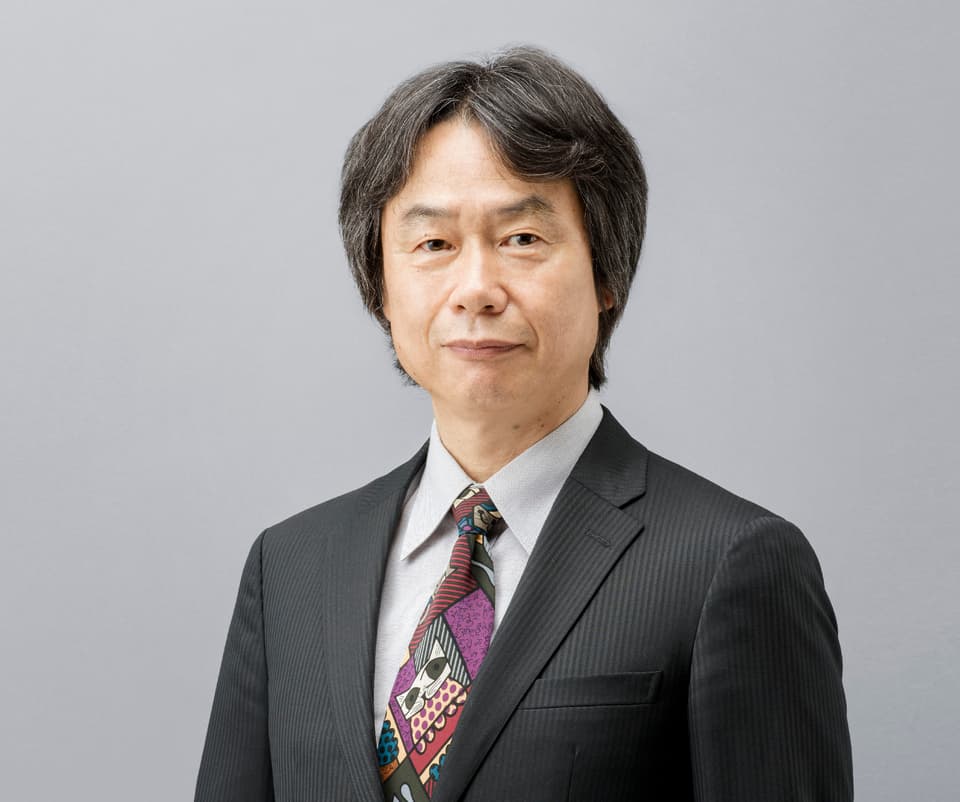
Shigeru Miyamoto will receive the first Legend Award from the Academy of Interactive Arts & Sciences at the 30th annual D.I.C.E. Awards in Las Vegas on February 18, 2027. The award is a new honour created to recognise a game-industry figure whose work continues to influence interactive entertainment. AIAS says it will be presented no more than once per decade, making Miyamoto the inaugural recipient of a distinction intended to be rarer than the organisation’s regular annual awards.
A new award with an unusually long interval
The Academy announced Miyamoto’s selection on November 16. The ceremony is scheduled for the Cosmopolitan in Las Vegas, where the award will be presented during the 30th D.I.C.E. Awards. AIAS describes the Legend Award as recognition for a creator whose achievements have already earned lasting acclaim and whose influence continues to reach game makers and other entertainment fields.
The organisation’s decision to limit the award to no more than one recipient per decade sets it apart from the annual categories at D.I.C.E. It is not intended to recognise a single game released during the year or to compare a group of current nominees. Instead, the award is designed around a longer view of creative influence. Miyamoto is its first recipient, so the Academy has not yet established a pattern for how often it will be presented or who might receive it in the future.
AIAS president Meggan Scavio said Miyamoto’s influence across games and entertainment made him an appropriate choice for the inaugural honour. The announcement names him as Nintendo’s representative director and fellow, and highlights the continued reach of the characters and series associated with his career.
From Donkey Kong to Nintendo’s defining series
Miyamoto joined Nintendo in 1977 after studying industrial design at Kanazawa College of Art. His early breakthrough came with Donkey Kong in 1981, an arcade game that introduced a character who would later become known as Mario. The success of Donkey Kong helped establish Nintendo as a major force in arcade games and gave Miyamoto a platform to develop ideas that would become central to the company’s identity.
Super Mario Bros. and The Legend of Zelda followed, creating two series that have remained important across several generations of Nintendo hardware. Their influence is not limited to their characters or settings. Mario helped establish a clear language for side-scrolling platform games, while Zelda became a reference point for exploration, puzzle design and adventure structure. Both franchises have changed considerably over time, but their core identities remain recognisable.
Miyamoto’s work has also extended beyond those two series. AIAS cites his involvement with Kirby and Pokémon, as well as his creation of Pikmin and his work on Wii Sports and Wii Fit. These projects show the range of Nintendo experiences he has helped shape, from character-driven adventures to games designed around movement, social play and accessible controls.
A designer whose influence reaches beyond one console
Part of Miyamoto’s significance comes from the way his work has crossed hardware generations. Donkey Kong began in arcades, Mario and Zelda became central to Nintendo’s home consoles, and later projects helped define the company’s approach to motion controls and accessible play. The systems changed, but the design questions remained familiar: how should a player understand a space, what makes an action satisfying, and how can a game communicate its rules without overwhelming someone who is new to it?
That approach has helped Nintendo build series that can be introduced to new audiences without losing their established identity. A Mario game can change its camera, movement or world structure and still feel recognisably connected to earlier entries. Zelda can move between top-down exploration, large 3D environments and more open-ended systems while retaining a clear sense of discovery. Miyamoto has not worked alone on these games, and the award should not obscure the contributions of the designers, artists, programmers, producers and other teams who turned their concepts into finished products.
Nintendo’s official corporate profile currently lists Miyamoto as an Executive Fellow and Representative Director. He has also become involved in the company’s work outside traditional game releases, including its theme-park projects and filmed entertainment. The Super Mario Bros. film and the Super Nintendo World areas are examples of how Nintendo is extending familiar game worlds into other formats.
What the award recognises — and what it does not
The Legend Award is a recognition of a career and its continuing influence, not an announcement of a new game. AIAS has not attached the honour to a specific project or suggested that Miyamoto is stepping away from his current role at Nintendo. The award also does not mean that his creative work is finished. The Academy’s description focuses on the long-term impact of creators whose ideas continue to shape entertainment.
It is also worth separating Miyamoto’s individual recognition from the collective nature of game development. The franchises associated with him have been built by large teams over many years. Their direction has changed as new directors, producers and designers have taken responsibility for later entries. Miyamoto’s influence is substantial, but the continuing life of Mario, Zelda and Pikmin depends on the people who develop, test and maintain those games today.
The ceremony is set for February 2027
The 30th D.I.C.E. Awards will take place at the Cosmopolitan in Las Vegas on Thursday, February 18, 2027, with the special award scheduled for the ceremony. AIAS has not announced a detailed presentation segment beyond confirming the date and venue. The organisation says the event will celebrate its 30th anniversary and the introduction of the Legend Award.
Miyamoto’s selection gives that first presentation a clear connection to the history of the medium. His career spans the growth of Nintendo from an arcade and console company into a global entertainment business, and the games associated with him have reached players across generations. The new award is intended to recognise that kind of influence rather than a single commercial milestone.
For Nintendo, the announcement is another public recognition of one of the people most closely associated with its creative identity. For the wider industry, it establishes a new form of D.I.C.E. recognition that is meant to be used sparingly. The next recipient may not be named for years, but the first choice is now confirmed: Shigeru Miyamoto will receive the inaugural Legend Award in Las Vegas next February.
Sources
- Academy of Interactive Arts & Sciences announcement via PR Newswire, November 16, 2026
- Video Games Chronicle: award details and career context
- Nintendo: Directors and Executive Officers
Image credit: Ministry of Education, Culture, Sports, Science and Technology, Japan, via Wikimedia Commons, licensed under CC BY 4.0.