Derelikt brings PSOne-style sci-fi horror to PS5 on November 13
5 min read
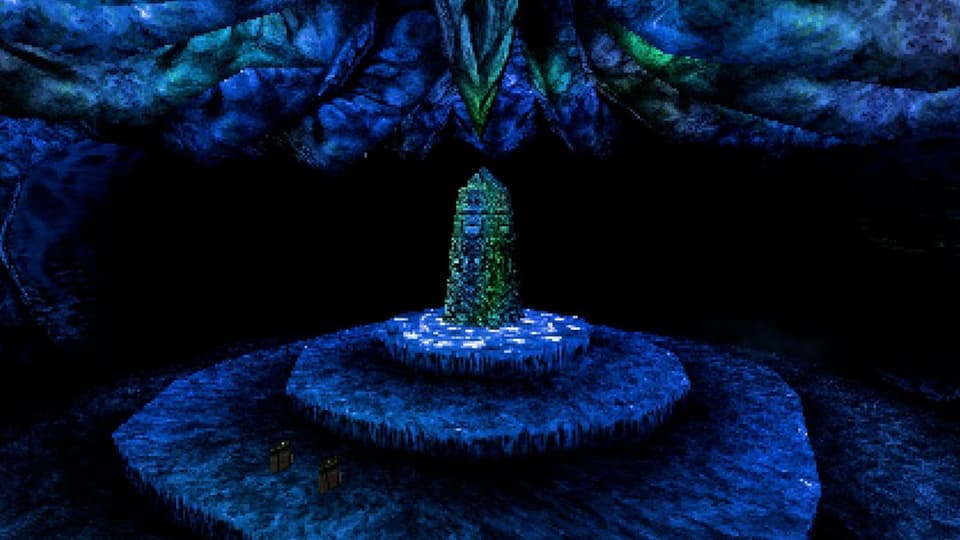
Image: Visuwyg / Hyperstrange / PlayStation Blog
Derelikt is coming to PlayStation 5 on November 13, 2026, bringing a deliberately old-fashioned kind of science-fiction horror to Sony's current console. Developer Philipp Jensen announced the date on PlayStation Blog, outlining a game that combines first-person combat, exploration and an uneasy relationship with the people still alive around you.
The setting is Von Neumann Outpost, a research station attached to an anomalous asteroid near Saturn. Players arrive as an outside contractor looking for the missing Excavation Team Delta. It is a premise built for uncertainty: the assignment provides a clear reason to enter, while the failing station gives you plenty of reasons to want to leave.
This is an announcement preview based on official material, rather than a review of the finished game. The release date is confirmed by the developer's post; how successfully the atmosphere and mechanics come together remains a question for launch.
A station that asks players to investigate
Derelikt's store description identifies System Shock 2, Alien Resurrection and Doom 3 as influences. It presents survival as a matter of limited preparation and unreliable help, rather than overwhelming firepower.
Exploration takes players through laboratories, maintenance routes and crew spaces, then deeper into the surrounding rock. Environmental puzzles and new paths are part of that progression. More than a dozen characters remain on the station, with differing motives and accounts of what happened.
That structure is potentially important because horror changes when the player has to interpret a place rather than simply pass through it. A corridor can be a route to an objective, a clue about an earlier event or a reason to rethink an apparently safe plan. The strength of this approach depends on whether those roles reinforce one another.
The survivors add another layer. A character does not have to attack the player to make a situation uncomfortable; incomplete information can be enough. If someone's explanation conflicts with what the environment suggests, the act of deciding whom to trust becomes part of exploring.
The official material establishes that tension as an intention. It does not establish how complex individual conversations will be, how much choices alter the story or how many outcomes exist. Those details should not be invented from the presence of dialogue alone.
Shooting is only part of survival
The store listing describes traditional and alien weapons, with ammunition, health and inventory space all contributing to the pressure. Its emphasis is on having enough capability to survive without becoming comfortable.
That distinction separates the pitch from a straightforward action game. In a power-focused shooter, an unfamiliar enemy can be an invitation to test a stronger weapon. In survival horror, the same encounter can raise a different question: what will this fight cost, and what might be waiting after it?
A restricted inventory can also change the meaning of exploration. Finding a useful item does not automatically settle the decision if carrying it requires leaving something else behind. The interesting part is the trade-off, provided the game communicates enough information for the choice to feel deliberate.
These are design possibilities, not promises about how every encounter in Derelikt works. The launch build will need to show whether resource pressure produces interesting decisions or merely inconvenience. For now, the developer and publisher are clearly presenting restraint as part of the experience.
Players drawn by the guns should therefore keep the wider structure in mind. The announced mix includes investigating, talking, solving problems and managing supplies. The weapons belong to that larger survival loop rather than defining the entire game.
The retro look goes beyond a low resolution
Jensen's PlayStation Blog post describes hand-painted textures, vertex-colour lighting, affine texture warping and dynamic geometry subdivision. Retro CGI-style full-motion video also forms part of the presentation, and visual effects can be toggled.
Those terms describe an attempt to evoke the behaviour of older 3D graphics, not simply reduce the detail of a modern image. Texture instability and angular geometry can make spaces feel less settled, especially when the viewer cannot immediately separate a deliberate visual artefact from something moving in the scene.
For horror, that uncertainty has a potential use. Clearer rendering is not always the only route to atmosphere; suggestion can encourage the player to fill in what the screen leaves ambiguous. The challenge is preserving enough clarity to navigate, identify threats and understand interactions.
That is why optional visual effects are a worthwhile detail. Different players have different tolerances for image distortion and visual movement. Being able to adjust the presentation provides some flexibility without requiring everyone to experience the aesthetic in exactly the same way.
It would still be premature to treat those toggles as a comprehensive accessibility package. The announcement confirms adjustable effects, not every comfort or accessibility option a player might need. Anyone with specific requirements should check the final settings and detailed launch information.
What the PS5 announcement actually confirms
November 13 is the date given in the developer's announcement for PS5. The PlayStation Store identifies Hyperstrange as publisher, lists a single-player experience and notes DualSense vibration support.
At the time of checking, the regional store page returned by the listing still displayed an unspecified release date. That does not erase the dated announcement, but it is a useful distinction: the November 13 date in this report comes from Jensen's PlayStation Blog post, rather than from the storefront field.
The announcement should also be read at its stated scope. A PS5 release does not, by itself, confirm identical timing on every other platform. Nor does a release day automatically tell us the exact hour the game will unlock in Nigeria or elsewhere.
For a prospective buyer, the practical next steps are straightforward: confirm availability on the account's storefront, check the local price when it appears and look for final platform-specific information. There is no need to turn missing details into assumptions.
Why this is one to watch
Derelikt's strongest pitch is the way its announced parts might support the same mood. A remote station creates isolation, conflicting survivors complicate the investigation, limited resources make confrontation consequential, and the unstable retro image adds another source of unease.
Whether that combination works will depend on execution. Level layout, pacing, enemy behaviour and the usefulness of information all matter more than a nostalgic screenshot on its own. A convincing old-console appearance can attract attention, but it cannot substitute for decisions that remain interesting over several hours.
For players who enjoy exploring an uncomfortable place and gradually understanding what happened there, the November 13 PS5 release is worth keeping on the calendar. The confirmed proposition is specific: a single-player sci-fi horror game that uses the visual language of early 3D games to frame investigation and survival on a failing outpost near Saturn.
Sources: Developer's PlayStation Blog announcement · Official PlayStation Store listing