Godzilla Destroy All Monsters Melee Remastered is out on PS5 with online battles and 12 kaiju
5 min read
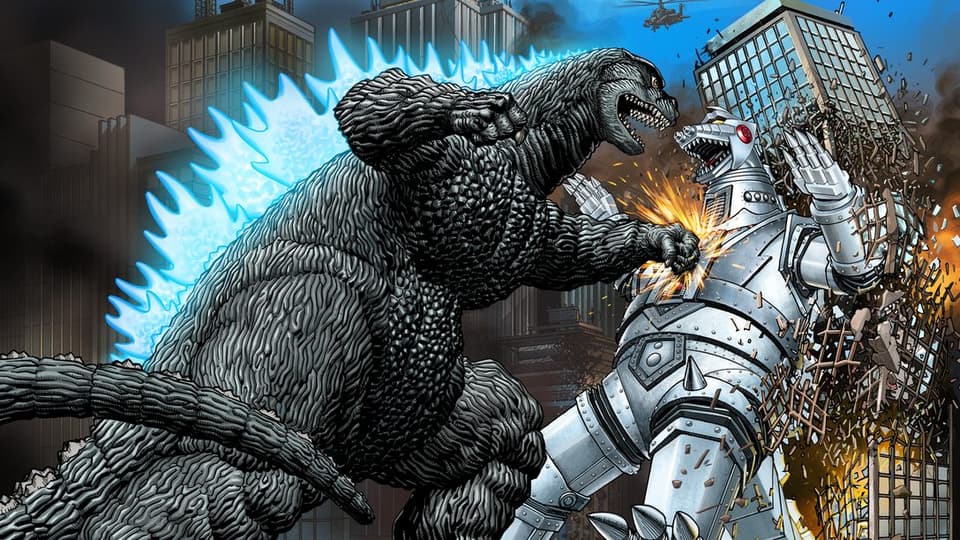
Image: Atari / Pipeworks Studios / Toho / PlayStation Blog
Godzilla: Destroy All Monsters Melee Remastered has arrived on PlayStation 5, bringing the 2002 monster brawler back with updated presentation and online multiplayer. Atari's store listing gives November 3, 2026 as the release date, so this is a game players can buy now rather than another distant announcement.
The appeal is easy to understand: choose a giant monster, enter a destructible arena and turn the surroundings into part of the fight. The more interesting question is how much variety sits underneath that immediate spectacle. PlayStation's launch-period fighter guide points to a roster with different approaches to movement, range and defence, rather than twelve interchangeable monsters with different costumes.
What the remaster includes
The PS5 listing confirms one to four local players and online matches for up to four, with PlayStation Plus required for online play. Atari and original developer Pipeworks Studios have added enhanced visuals and quality-of-life changes to the returning fighter.
There are eight locations with day and night variants, destructible scenery, energy attacks and Rage Mode. An updated unlock system lets players choose the order in which they obtain monsters, locations and gallery content. Additional single-player campaigns are provided for individual kaiju.
Those details make this more than a straightforward graphics announcement. Local multiplayer gives it a use as a shared-screen party game, while online play offers an alternative when friends cannot gather around the same console. Neither feature, however, tells us how reliably online matches perform in practice. This report covers the confirmed release and features; it is not a hands-on assessment of network quality.
The US store lists the standard edition at $29.99 and the digital deluxe edition at $34.99. Those are US storefront prices, not a promise of what an account in another region will pay.
Picking a monster changes the fight
PlayStation's official guide describes twelve playable kaiju and highlights meaningful differences between them. Heisei Godzilla is a relatively balanced choice with strong health, while Godzilla 2000 trades some durability for greater speed.
King Ghidorah favours ranged pressure but is less comfortable in close combat. Anguirus approaches the problem from the other direction, leaning on defence and grappling without a ranged attack. Rodan emphasises speed and aerial movement, while Destoroyah is a slower, heavier threat whose stronger options make demands on energy.
That spread suggests a useful way to approach a first session: choose a style before choosing a favourite face. Someone who enjoys staying mobile may find a different starting point from a player who wants to absorb pressure and force close exchanges. A familiar monster is still a perfectly good reason to pick one, but recognising its intended strengths should make the learning process less confusing.
It also changes how a loss should be interpreted. If a slow monster cannot chase down a faster opponent, the answer may be better positioning rather than pressing attacks more quickly. If a ranged fighter keeps getting overwhelmed at close distance, maintaining space becomes part of the job.
Why arenas matter in a monster fighter
Destructible environments are an obvious fit for Godzilla, but they can do more than decorate a match. When buildings become weapons and the stage contributes to the action, awareness has to extend beyond the two characters immediately exchanging blows.
For new players, that creates a second thing to learn alongside the controls. Watching the opponent is necessary, but so is noticing where a fight is moving and which parts of the environment remain useful. A player who focuses entirely on executing a favourite attack can overlook an easier opportunity nearby.
The same principle applies to multiplayer sessions with more than two participants. Attention becomes a resource. Committing to one opponent can leave another free to approach, while an apparently safe position may stop being safe when the fight spreads across the arena.
These are practical considerations for arena brawlers, not a claim that every stage here achieves perfect competitive balance. The remaster's actual balance, readability and long-term depth will need to be judged through play. What the feature set establishes is that the surroundings are intended to participate in the spectacle.
Local and online play serve different audiences
The local-player count is particularly useful information for anyone considering this as a game to share at home. Before buying, think about how the game will actually be used: occasional matches with visitors, regular competition with friends, or mostly solo play.
For a local group, the appeal is immediate access to the same match and the reactions happening around the screen. For an online group, account subscriptions and connection quality become part of the practical calculation. The store's distinction is clear: online play is optional, but its multiplayer component requires PlayStation Plus.
Players primarily interested in solo content should pay more attention to the campaigns and unlock structure than to the four-player headline. Being able to choose unlock priorities can make a difference if a particular monster is the reason for buying. It gives the collection side of the game a clearer personal goal.
There is no need to assume one mode is the definitive experience for everyone. A good purchase decision starts with the mode a player expects to spend time in, then checks whether the confirmed features support that use.
What to check before choosing an edition
The standard and deluxe price difference is small enough to invite an impulsive upgrade, but edition labels alone are not a useful buying guide. Look at the exact extras in the relevant storefront and decide whether those additions are things you want to use.
The same caution applies to regional pricing. Nigerian players using a supported PlayStation account region should check that account's actual checkout price and payment options. A dollar figure in an international news report does not account for regional storefront differences or the cost of funding an account.
For returning fans, nostalgia provides a reason to look, but the remaster's value will depend on the experience available now. Improved presentation and restored access to an older game are different questions from online stability or whether its combat still feels satisfying.
For newcomers, the stronger starting point is the combination of monster variety, environmental destruction and shared multiplayer. Godzilla: Destroy All Monsters Melee Remastered is available on PS5 now, and its confirmed features establish a clear proposition: a returning kaiju brawler built around choosing a monster and making a considerable mess with friends.
Sources: PlayStation's official fighter guide · PlayStation Store listing