Pearl Abyss Expands AI Use Across Its Game Development Pipeline
5 min read
Pearl Abyss says it is expanding the use of artificial intelligence across its game-development pipeline, including repetitive task automation, support for content creation and testing. The South Korean developer set out the approach in its third-quarter 2026 earnings letter, published on November 12. It also described using AI to test design concepts before full implementation, a process it says can help teams assess ideas earlier and allocate development resources more efficiently.
The update is notable because Pearl Abyss faced criticism earlier this year after players found AI-generated visual assets in Crimson Desert. The studio apologised for leaving some experimental material in the released game and acknowledged that it should have been clearer about its use of AI. Its latest comments describe AI as a production tool and say the development team remains responsible for the core gameplay experience and actual content creation.
What Pearl Abyss says it is using AI for
The earnings letter outlines several areas where the company wants to increase AI use. These include automating repetitive tasks, supporting content creation and improving testing. Pearl Abyss also says it can use AI to examine different design concepts before committing to their full implementation. The company previously validated systems after building them manually, according to the letter. It now wants to test more options earlier in the process.
That distinction matters because AI can be used at different stages of development. A tool that helps a team compare ideas or automate a repetitive internal task does not necessarily create material that appears in the finished game. It can change how a studio organises its work without changing the authorship of the final experience. Pearl Abyss is presenting its plan in those terms, describing AI as a way to improve efficiency and quality rather than as a replacement for developers.
DokeV is one of the projects using AI for concept testing
Pearl Abyss specifically discussed DokeV, its creature-collecting open-world game first revealed in 2021. The studio says it is using AI to test different design concepts before implementing them. It describes the use as support for concept validation and production efficiency, while saying the core gameplay experience and actual content creation remain in the hands of the development team.
DokeV has been in development for several years, and Pearl Abyss has not yet provided a full release schedule. The company is targeting the second half of 2028 for launch and plans to share a development update before the end of 2026. It has also discussed a larger marketing push, including playable demonstrations, around the second half of 2027. Those are targets rather than a fixed release date.
The Crimson Desert AI-art controversy
The latest statement arrives after a separate controversy involving Crimson Desert. Following the game’s release in March 2026, players identified visual props that appeared to have been created using generative AI. Pearl Abyss acknowledged that some two-dimensional assets had been produced with experimental tools during early development. The studio said those materials were intended to be temporary and should have been replaced after review by its art and development teams.
Pearl Abyss accepted responsibility for the oversight and apologised for not clearly disclosing its use of AI. The company said some assets had remained in the released game despite its intention to replace them. The incident raised questions about how players can know whether AI-generated material has been used in a finished product, particularly when the developer has not disclosed it in advance.
There is a difference between that issue and the workflow described in the November earnings letter. The earlier controversy concerned assets that appeared in the commercial release. The new statement focuses on production processes such as testing concepts, automating repetitive tasks and supporting development work. That does not remove the need for transparency, but it means the company is discussing a wider set of internal uses rather than announcing that generated art will become a visible feature of future games.
What the financial update says
Pearl Abyss’ official third-quarter results provide context for the development comments. The company reported revenue of 101.5 billion won for the July-to-September period, up 18 percent year over year. Operating profit was 20.7 billion won, down 8.8 percent, while net profit fell 71 percent to 10.8 billion won. The company attributed the net-profit decline in part to currency movements and said overseas markets accounted for 86 percent of quarterly revenue.
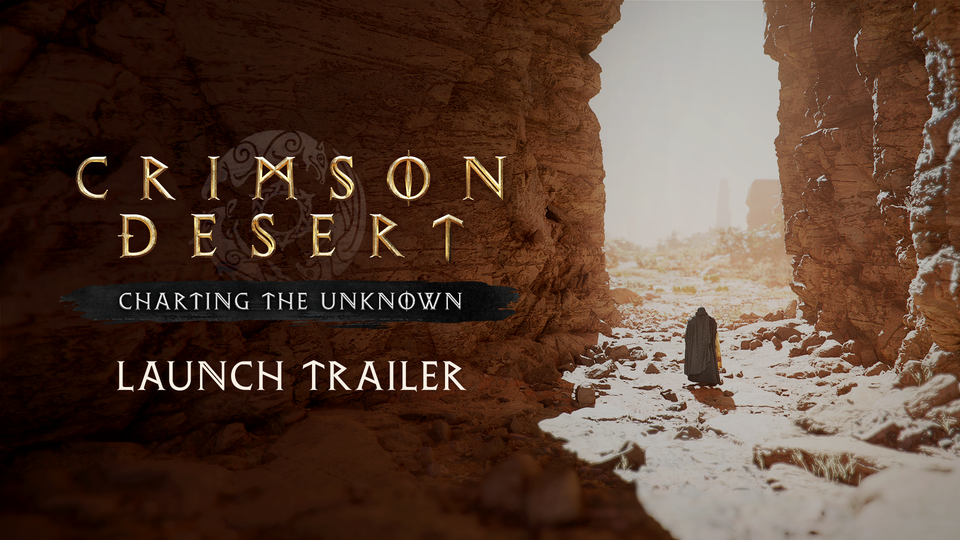
Black Desert contributed 61 billion won in revenue, while Crimson Desert contributed 40.6 billion won. The company said it was continuing to support Crimson Desert with additional content and platform plans. It is targeting a Nintendo Switch 2 version in the first half of 2027. The game’s first major downloadable content release, Charting the Unknown, launched on October 30, according to the company’s results update.
Why the announcement matters beyond one studio
Game developers are increasingly discussing AI as a tool for tasks that range from research and testing to code assistance and content workflows. The debate is not limited to whether a game contains generated images. It also involves disclosure, ownership, quality control, working conditions and the effect on creative roles. A studio may see internal automation as a way to reduce repetitive work, while players and developers may still want clear information about how the tools are used and where human review remains necessary.
Pearl Abyss’ announcement is a concrete example of a major developer making AI part of its production strategy. The company has named several functions and explained how it uses the technology to test concepts earlier. That is more specific than a general statement that AI will make development faster, but it still leaves important questions unanswered. The studio has not published an independent assessment of the tools’ performance or a detailed policy covering every kind of content.
What to expect next
The near-term milestone is the promised DokeV development update before the end of 2026. Pearl Abyss has not given a date for that presentation. The studio is also preparing for the longer marketing phase planned for the second half of 2027, with playable demonstrations mentioned as part of that effort. The second-half 2028 release target remains a broad window, not a confirmed launch date.
For Crimson Desert, the next major platform milestone is the Switch 2 version targeted for the first half of 2027. Pearl Abyss has not provided a precise release date for that version either. In the meantime, the company says it will continue expanding content and improving the existing game.
Pearl Abyss has made its direction clear: AI will become more widely used across its development processes, while the studio says human developers will continue to lead gameplay and actual content creation. Whether that approach improves production without creating new trust problems will depend on how openly the company communicates and how the tools are used in future releases.